In recent years, there have been a plethora of headlines and warnings about nonstick cookware and health outcomes. Since I am someone who cooks everyday, changing out my cookware seemed like a reasonable, actionable step towards protecting my family’s health.
I never been someone who wanted a large, predetermined set of pots and pans and have always opted for personal curation based on what I actually will use. Too often, cookware sets are bloated curations, and cabinet space is like gold in my eyes.
So if you’re looking to upgrade your cookware and don’t want to waste your money, these are the 5 high quality pots and pans that you’ll actually use, that aren’t coated with questionable nonstick surfaces, and will last you for generations to come.
Starting off on the lower end of the budget but giving you a ton of bang for your buck, the humble Lodge Cast Iron pan. I know a lot of people are scared of cast iron because they think it’s hard to care for, but it’s actually quite simple. I’ve had the same pan for the last 15 years, and it’s still in excellent condition!
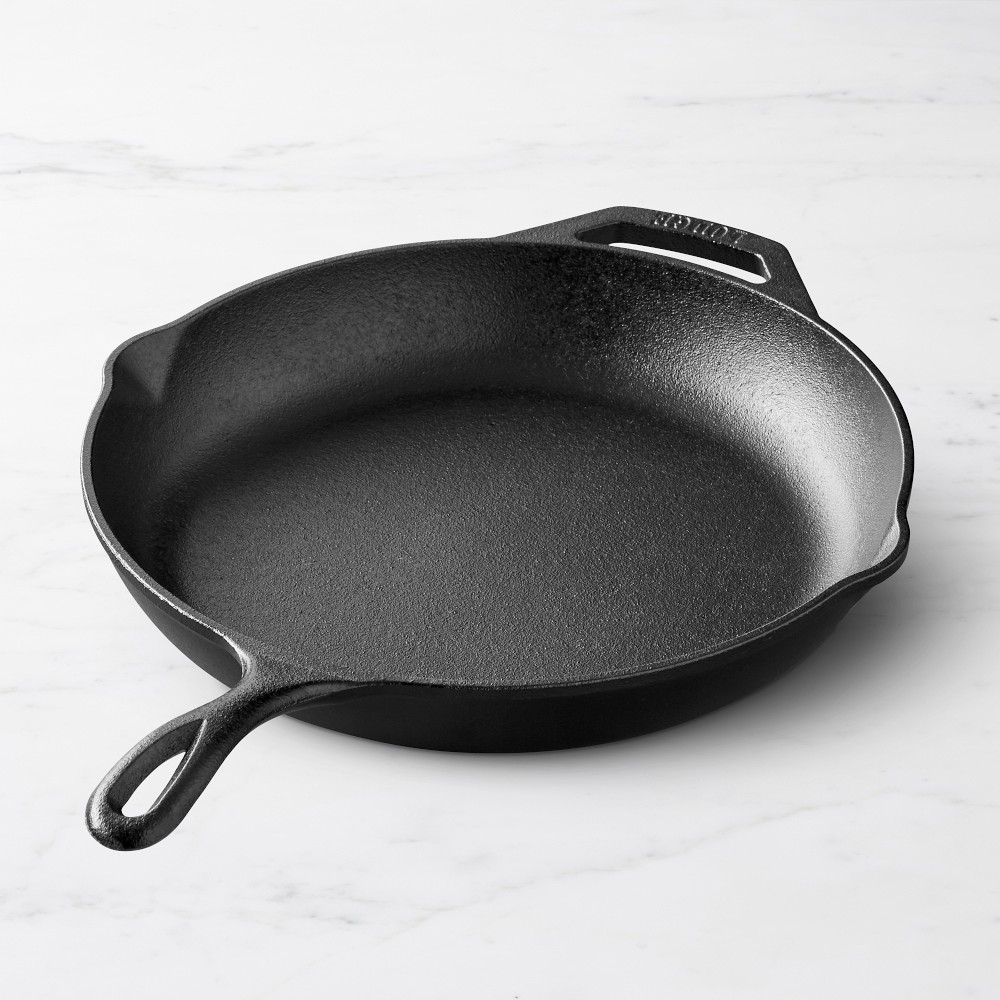
Personally, I love cast iron because it has beautiful, even heat retention, you don’t have to worry about scratching the surface, and if you’re on the anemic side, it’s an easy way to gently infuse your food with iron. When you first get it, make sure to ‘season’ it (there’s tons of info online on how to do this). Once you’ve done that, you’ll be set – possibly for years to come. Additionally, I wash mine with soap with no issues.
Best for: searing meats, eggs, pancakes, frittatas, grilled cheese sandwiches
The next pan in my cooking arsenal is this stainless steel pan. This is another piece of cookware that scares people because they associate it with foods sticking and making it a nightmare to clean. The truth is, stainless steel is like the OG of nonstick cookware, and it’s much lighter than a cast iron pan.
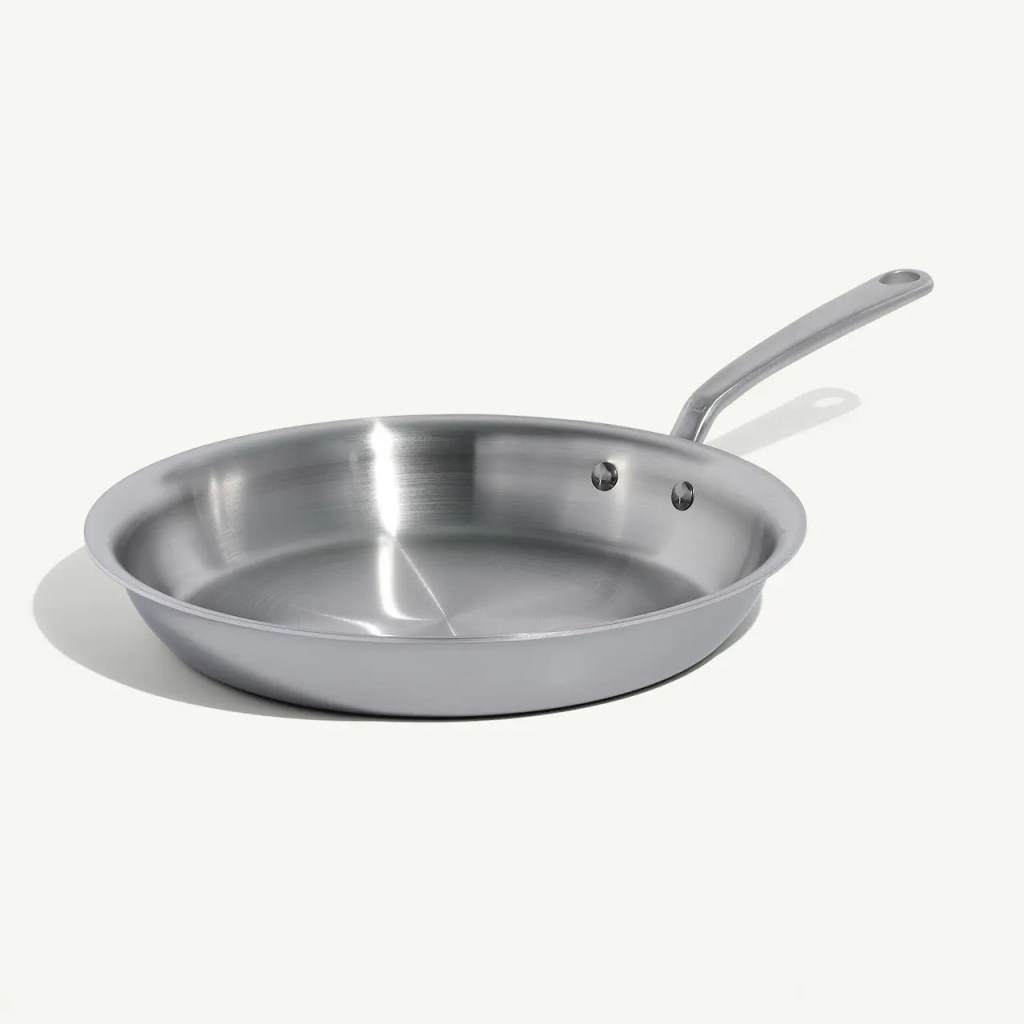
The trick is allowing the pan to preheat on medium low heat to allow the ‘pores’ of the pan to seal, thus making the surface nonstick. You’re looking for the liedenfrost effect: you should be able to sprinkle water on the surface and instead of immediately steaming away (pan is too hot) or appearing to slowly boil on the surface (pores aren’t sealed), the water should bead on the surface and roll around like water on a lilypad. Then apply your cooking oil of choice and proceed. This may take a little trial and error, but learning how to cook on stainless is well worth the effort.
Best for: searing meats, eggs, vegetable sautes, quick pasta sauces
*Pro tip for cast iron and stainless: size up. It’s much easier to flip things when you aren’t hitting the edge of a small pan with a spatula. Also ideal for growing families.
Another essential piece in any chefs cabinet is a classic sauce pot. Perfect for boiling pasta, steaming vegetables, reheating soups – my little stainless steel pot is a workhorse in the kitchen. I opt for a mid size, 2.5q pot for the most versatility. You can always choose to fill it just a little, but when I need the extra room for cooking for a few people, I have it. Additionally, this one comes with a steamer basket so you can easily steam vegetables or dumplings without them becoming water logged from boiling. Just like the cast iron and stainless steel pan, you don’t have to worry about scratching teflon into your food with a stainless steel saucepot.
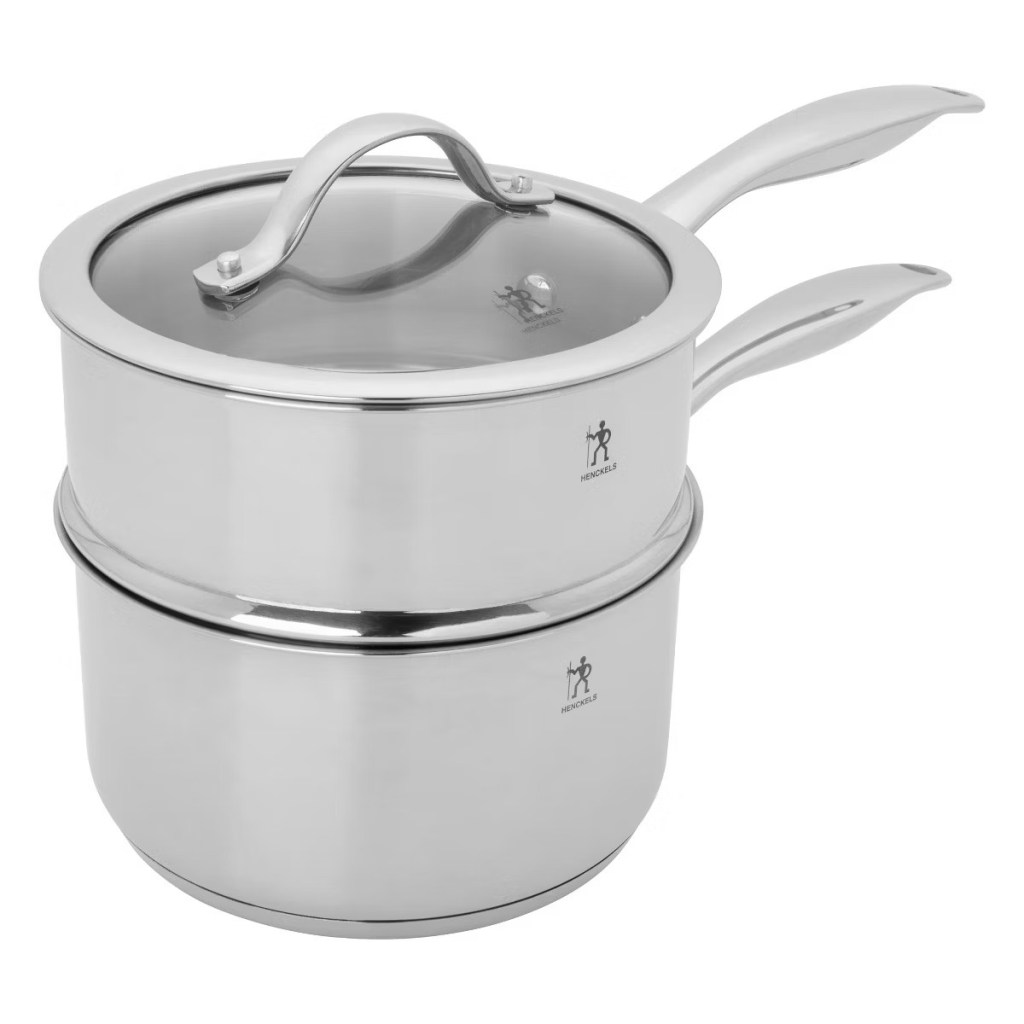
Best for: boiling pasta, steaming rice and vegetables, hardboiled eggs, creating gravies, making and reheating soups
If you are someone who doesn’t cook a lot, or you’re a household of 1-2 people, you may be able to get away with just the 3 pieces of cookware above. As a household with multiple adults and children, my cooking requirements are a little greater, so the next to pieces are essential for our household.
My Staub Enameled 7qt pot is a nearly daily essential. I started my enameled cookware journey with a Le Creuset braiser, and while they’re lovely for creating beautifully juicy braised meats, I was frequently frustrated that the light enamel would stain and required extra cleaning attention. Not to mention, with more babies, I needed more cooking surface area.
This led me to Staub enameled cast iron; it’s a dark coated interior (goodbye staining!), and the lids have ‘drip spikes’ which direct condensation back down onto your food resulting in juicier meals. Because of our family size and my love of cooking, I opted for the larger ‘Cocotte’ dutch oven. I can easily sear and slow cook meats, I can use it to make soups, and it’s deep enough to make an artisan loaf of bread. My love for this pot/pan is endless.
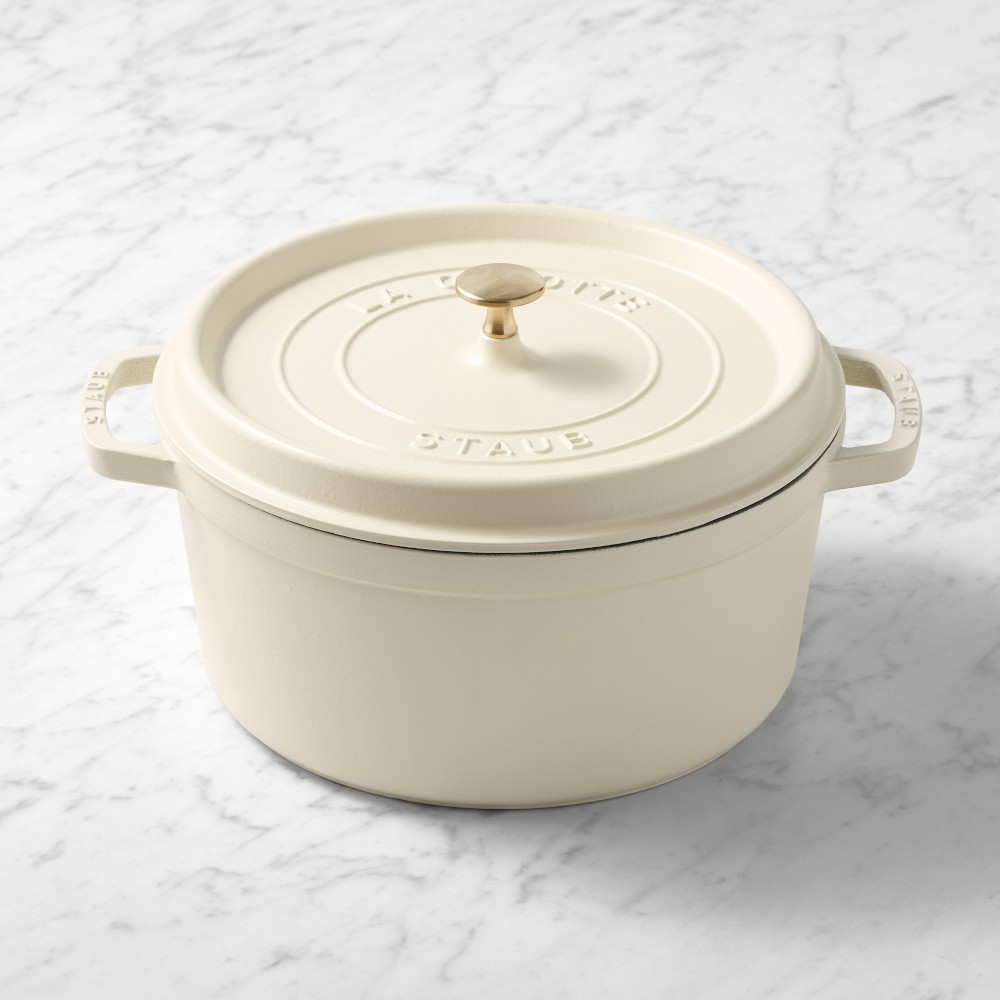
Because it’s cast iron, it heats evenly and retains heat which means you can use a lower temperature to cook (resulting in less dried out meats). Also, since it’s enameled, it reduces how much food sticks to it. A word of caution though, you won’t want to use metal utensils on this in order to preserve the life of the pan. I typically opt for silicone or wooden utensils.
Best for: large families/bulk cooking, braising meats & stews, soups, bread
This final pot is completely optional, but as someone who genuinely loves cooking, I adore this pot! My Mauviel 5qt pot is the perfect companion for creating silky soups, comforting bowls of chili, dozens of hardboiled eggs, and large batches of pasta.
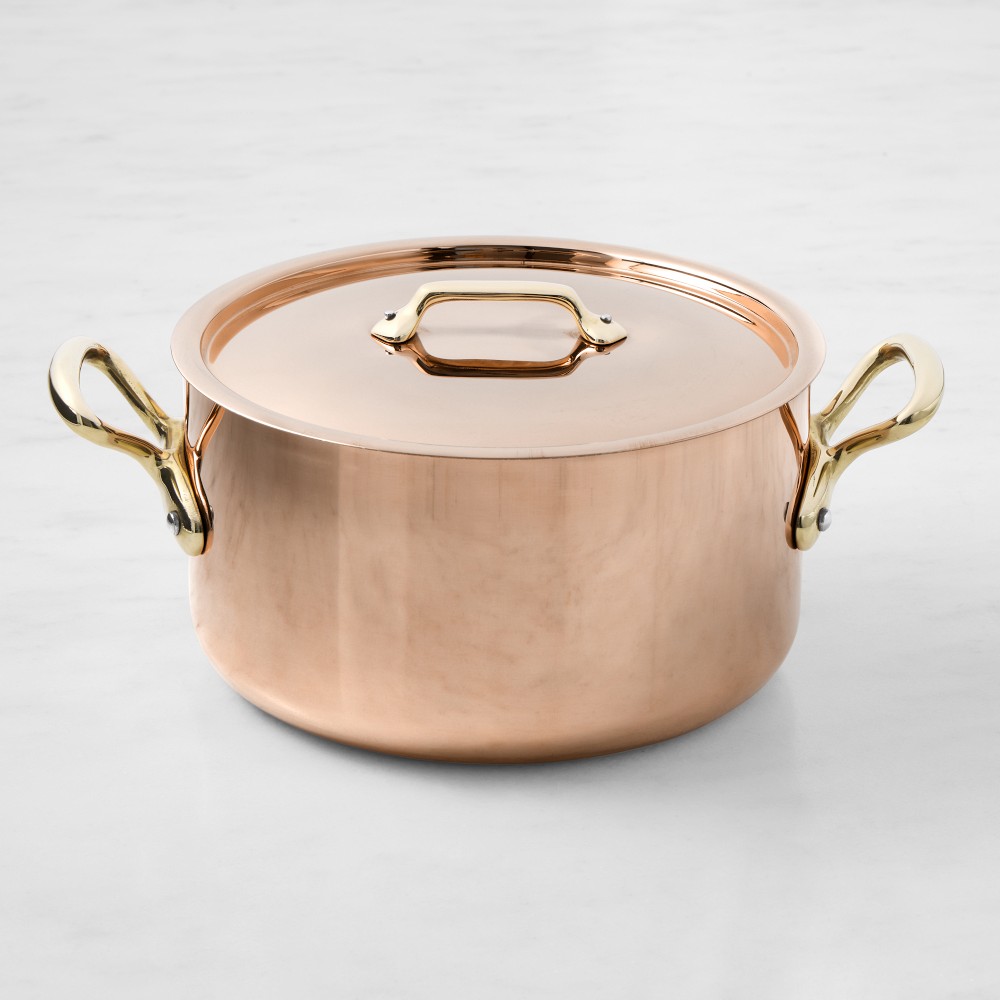
Copper is an excellent conductor of heat, so this pot brings water and liquids to a boil rapidly. The interior is made of stainless steel, so there are no worries about scratching it with whatever utensils you choose to use. While this is the most expensive piece of cookware I own, I truly adore it, and with proper care it will be a piece I can pass down to my children! If you aren’t a fan of the patina copper develops over time, you can use ketchup or Barkeepers Friend to polish it up.
Best for: soups and chili, large batches of pasta/ hardboiled eggs
Whether you’re trying to ditch nonstick cookware or just trying to downsize your pots and pans, I hope you find this list helpful! Happy cooking.
*This site uses affiliate links. Thank you for supporting me!


Leave a Reply